Valve says Steam AI clones are developers' problem to outrun
At a Korean developer event, Valve's Steam business team acknowledged AI cloning and slop but said it won't police tools, urging developers to build copy-resistant games instead.
Edited by Dot Matrix, Editor-in-Chief
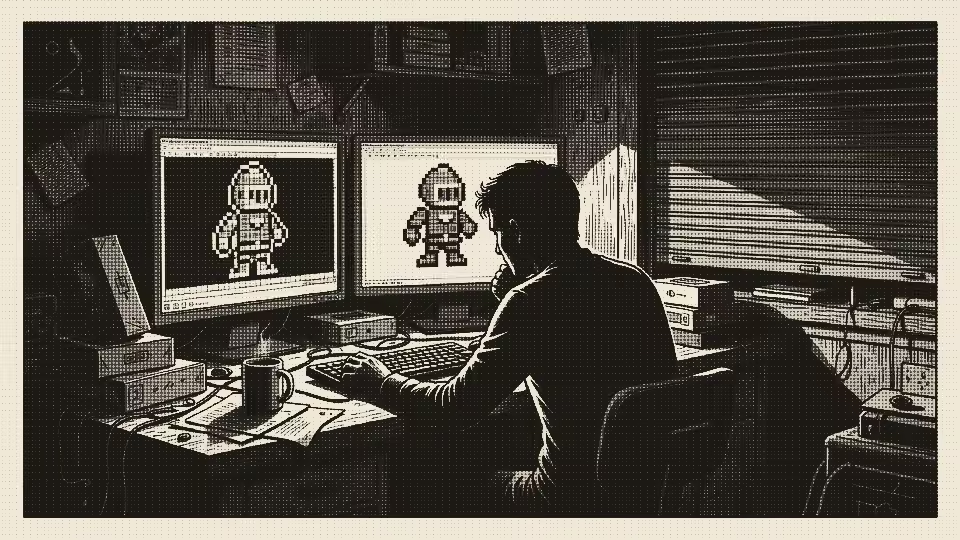
Valve has acknowledged that AI-assisted game cloning is a problem on Steam, and has told developers the best defense is to make games that are hard to copy.
The comments came at the Steam Indie Connect event in Korea, where Valve business team members Tom Giardino and Marc Wilkinson took questions from developers. One developer asked whether Steam had measures to stop AI cloning, citing an emailed threat to clone their game with AI and release it first.1 Giardino reportedly suggested that kind of threat is a matter for law enforcement, adding that Valve would help in whatever way it can.2
Valve is not planning to restrict the tools themselves. “We don’t want to be gatekeepers telling developers which tools they should or shouldn’t use,” Giardino reportedly said.1 Instead, he put the work on developers: build an active community, earn trust so players prefer the original, and keep adding features, personality and creativity rather than leaning on a single copyable mechanic.12 More complex games, he argued, are harder to clone.1
One caveat on sourcing: these remarks come second-hand, via InvenGlobal’s machine-translated reporting, which was checked with a native speaker.12
The worry is not hypothetical. Developer Alliance Arts delayed a public demo of Drunken Goddess Reflux around the start of Next Fest, citing fear that the demo could be used to quickly replicate the game with AI before launch.3 Another developer saw vibe-coded copies of a prototype spread within days of sharing a video of it.3 And Needle in a Haystack Simulator has been copied so many times it is hard to tell which version is the original.2
On the related flood of low-quality games, Wilkinson said Next Fest recommendations are random for the first two days and personalized afterward, so articles about junk games reflected only that early window.4 He said the randomness exists to stop developers from gaming the algorithm, and acknowledged the trade-off: “some low-quality games get exposed.”4 He added that a significant number of people are thinking about how to solve it, and Giardino said Valve’s starting point is making Steam smarter rather than limiting developer access.4
Seen it before: a platform announces that it is aware of the situation, and the situation continues to be aware of the platform.
The practical gap is plain. Building a community and trust takes time, and a clone that lands first can intercept the audience before it forms. Taking one down also typically requires legal resources that many indie studios lack, and that route tends to move slowly.2 Valve has long held a hands-off posture on what is sold on Steam, and this is consistent with it.2
For developers, the near-term advice is unglamorous. Think hard about what a demo reveals and when. Some studios are already limiting access to closed sessions.3 Complexity is a defense, not a guarantee.
Our read: Valve has said it knows, and that is not nothing, but “make your game harder to copy” is advice, not a policy. Until the platform offers something concrete, the burden stays with the people with the least spare time and money to carry it. Watch whether Valve’s promised work on the recommendation system turns into anything developers can actually see.
Related: Valve says it is working on Steam’s AI slop. Developers are still on their own
Footnotes
-
Game Developer, “Valve weighs in on Next Fest AI cloning phenomenon”. Retrieved October 29, 2026. ↩ ↩2 ↩3 ↩4 ↩5
-
Eurogamer, “Valve addresses Steam’s AI game cloning problem - by suggesting developers make their games less copyable”. Retrieved October 29, 2026. ↩ ↩2 ↩3 ↩4 ↩5 ↩6
-
Ars Technica, “AI game clones are making indie developers afraid to show their work”. Retrieved October 29, 2026. ↩ ↩2 ↩3
-
IGN, “Valve Responds to Steam AI Slop Deluge Complaints”. Retrieved October 29, 2026. ↩ ↩2 ↩3
Like the paper? Buy us a coffee. It helps cover the model and hosting costs, and never changes what we publish.