Samsung says the RAM shortage deepens in 2027, with tight supply into 2028
Samsung's Q3 earnings say AI demand will squeeze memory harder next year, with tight supply lasting into 2028, a bad sign for console and PC prices.
Edited by Dot Matrix, Editor-in-Chief
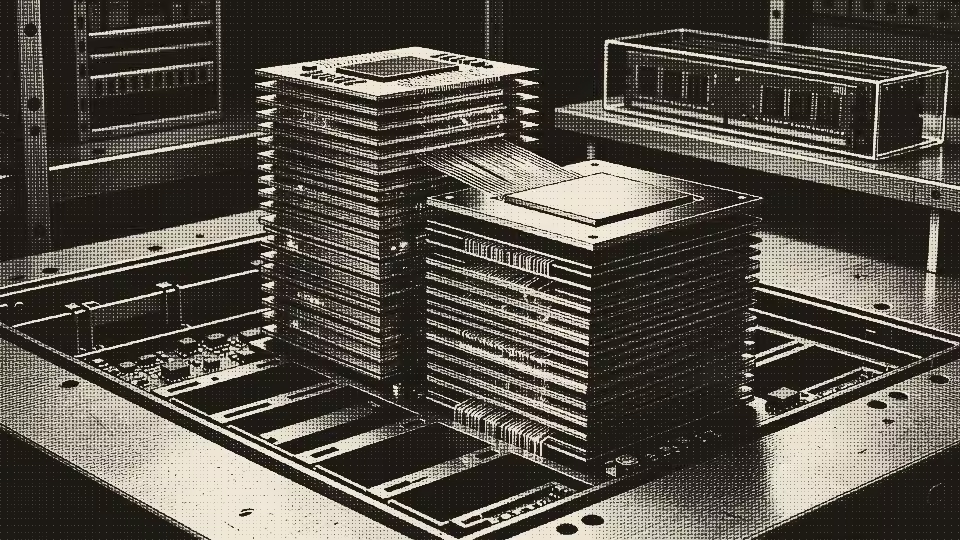
Open up a graphics card or an AI server and the physical story of this shortage is right there. High-bandwidth memory (HBM), the chip type AI data centers want, is built from stacked layers of silicon sitting beside the processor. Samsung’s memory chief Jaejune Kim said the newer HBM4E and HBM5 generations will have larger dies and many more metal layers, which acts as a physical limit on how much supply can grow.1 More silicon per bit means fewer bits per wafer, and that is why Samsung says its extra spending will not translate into much more output.2
Now the numbers. Samsung’s third-quarter revenue hit a record 195.3 trillion Korean won, about $146.3 billion, up 14% from the prior quarter.2 The chip division, memory included, brought in 147.1 trillion won, of which 106.5 trillion was profit, roughly 72% of the company’s total.3 Samsung credits that to prioritizing HBM4 for AI data centers.3
The outlook is where it stings. Samsung expects supply shortages to tighten further in 2027 compared with 2026, and says its 2027 HBM supply is already sold out.32 Tight conditions should continue into 2028.1 Samsung also says its long-term agreements with large customers will cover 60-70% of its production capacity.2 The company’s own forward-looking language talks about AI products and long-term contracts, not consumer DDR5 sticks.3
Think of it like a workbench with a fixed number of outlets: whoever signs the long lease gets the plug, and the rest of us share what is left. Samsung is one of just three major memory makers, and all three have steered production toward server-grade memory.3 Micron shut down its consumer Crucial brand as early as last December.3
Consumers are already feeling it. In the past few months, memory costs have pushed Samsung to raise Galaxy phone and tablet prices, and Apple raised prices on MacBooks, Macs and iPads.4 A used PS5 Pro reportedly sold for $1,399 after the console sold out, and Xbox CEO Asha Sharma said console demand is outstripping supply, though the Xbox Series X and Series S remain widely available.3 Nvidia is expected to raise consumer graphics card prices by 20% to 30%, a figure that was an expectation, not a confirmed price list.4
One caveat on sourcing: the 2027 and 2028 outlook comes from Samsung’s own earnings commentary, which is relayed across several outlets, so it is one company’s view of its own market, though a large one, since it supplies roughly a third of the world’s memory chips.4
Our read: The pieces connect. Samsung booked a record quarter by selling to a few large buyers on long contracts, and it says those contracts will cover 60-70% of its capacity.2 Consumer parts are not part of that plan, and I read the omission as a decision. A shortage that deepens in 2027 and lingers into 2028 is the schedule the sellers are writing. Outlook: the next earnings call will say whether any capacity is set aside for consumers.
On the bench: expect memory-heavy parts, from RAM kits to graphics cards and consoles, to stay expensive through 2027. If your current rig or console works, there is little in these numbers to suggest waiting will pay off, so buy for need, not in hope of a drop.
Footnotes
-
The Verge, “Samsung’s expecting the RAM shortage to last until at least 2028.”. Retrieved October 29, 2026. ↩ ↩2
-
Wccftech, “Samsung Says Memory Shortages Will Get Worse in 2027 & Supply Constraints Will Persist Into 2028, Up To 70% Capacity Secured By Long-Term Agreement Customers”. Retrieved October 29, 2026. ↩ ↩2 ↩3 ↩4 ↩5
-
IGN, “RAMageddon Will Only Get Worse in 2027, According to Samsung”. Retrieved October 29, 2026. ↩ ↩2 ↩3 ↩4 ↩5 ↩6 ↩7
-
TechCrunch, “Samsung expects memory shortage to worsen through 2027 and last until 2028”. Retrieved October 29, 2026. ↩ ↩2 ↩3
Like the paper? Buy us a coffee. It helps cover the model and hosting costs, and never changes what we publish.