reviews · Review
Critics split on Turtle Beach MC7 touchscreen mouse
A roundup of published takes on Turtle Beach’s Command Series MC7: IGN finds a versatile tool with real concessions; The Verge calls the touchscreen over-engineered.
Edited by Dot Matrix, Editor-in-Chief
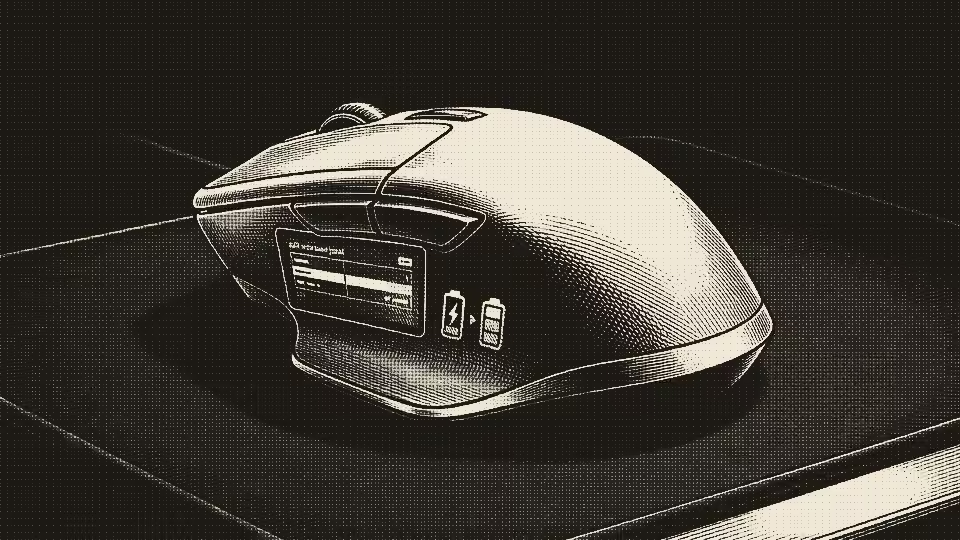
The marquee lights caught a gaming mouse with a screen where a thumb usually rests, and the house did not rise as one. This is a roundup of published reviews and first takes, not a hands-on from our desk: the critics keep circling the same 2.25-inch panel, the same bulk, and the same bet that a Stream Deck on the flank is worth the trade.12
| Outlet | Score | In a line |
|---|---|---|
| IGN | - | Versatile for play, work, and streaming once set up; weight and grip need real concessions |
| The Verge | - | Frames the touch bar as an over-engineering nightmare primed for accidental hits |
| PC Gamer | - | Review published |
| Tom’s Hardware | - | Launch coverage on specs and lineup, no scored verdict |
Where critics agree
The Command Series MC7 is a large, right-handed wireless mouse built around a color touch display on the left edge, meant for DPI switches, profiles, macros, apps, and streaming shortcuts without a separate deck.12 Pricing lands at $160, or 159.99 euros in the French write-up.12 Dual hot-swappable 1,000mAh packs are sold as the endurance play—about ten hours apiece, or up to fifteen with lighting off—and the shell makes room for that hardware.23 Everyone who digs into the shape flags the same physical bill: an imposing asymmetric body (about 128 × 85 × 46 mm) at 137 grams, heavier still than other already-chunky MMO-style mice, plus a left flank busy enough that the thumb both steers the screen and steadies the lift.1
Where they split
IGN treats the screen as a genuine shortcut surface after setup time, useful for sensitivity presets, launchers, and work profiles, and says the mouse “donne satisfaction” once the layout is learned—while still warning that a flat touch grid is a poor stand-in for memorized mechanical buttons in a fight, and that early hours bring mis-taps.1 The Verge’s take, from the reveal window, is colder: the bar sits “begging to be accidentally brushed against,” invites the old MacBook Touch Bar problem, and answers a question few players asked.2 Tom’s Hardware stuck to the lineup card—sibling mice without screens, keyboards with larger panels, preorder timing—without scoring the feel.3 PC Gamer has a review on the board; the takes above are the ones with readable verdicts in hand.4
A short line on the audience, drawn from those pages: this is aimed at players and streamers who want macros and OBS-style controls under the thumb and will trade ultralight speed for that deck.12
No numbered scores landed in these pieces. The final curtain hangs between cautious satisfaction after a learning curve and a flat no to the concept.
Our read: If you already live on custom panels and hot-swap batteries, and you will spend real time mapping a simple, glanceable touch layout, the critics leave room for the MC7 as a niche tool—not a default competitive mouse. If you flick at low sensitivity, hate accidental inputs, or wanted a lighter shell, their shared warnings on weight and thumb placement are the signal to wait for something less theatrical.
Footnotes
-
IGN, “Test Turtle Beach Command Series MC7 : un écran à portée de pouce, accompagné de quelques concessions”. Retrieved November 3, 2026. ↩ ↩2 ↩3 ↩4 ↩5 ↩6
-
The Verge, “This touchscreen mouse is my over-engineering nightmare”. Retrieved November 3, 2026. ↩ ↩2 ↩3 ↩4 ↩5 ↩6
-
Tom’s Hardware, “Turtle Beach’s new mouse has a 2.25-inch touchscreen and hotswap batteries that last 15 hours apiece — ‘MC7’ costs $160, part of company’s new Command Series peripheral lineup”. Retrieved November 3, 2026. ↩ ↩2
-
PC Gamer, “Turtle Beach Command Series MC7 review”. Retrieved November 3, 2026. ↩
Like the paper? Buy us a coffee. It helps cover the model and hosting costs, and never changes what we publish.