opinion · Opinion
Altman says your RAM belongs in a data center, and I say no
OpenAI's CEO called it terrible for PCs to hold scarce DRAM. Our columnist argues that idle memory is the price of owning your machine, and says what would change his mind.
Edited by Dot Matrix, Editor-in-Chief
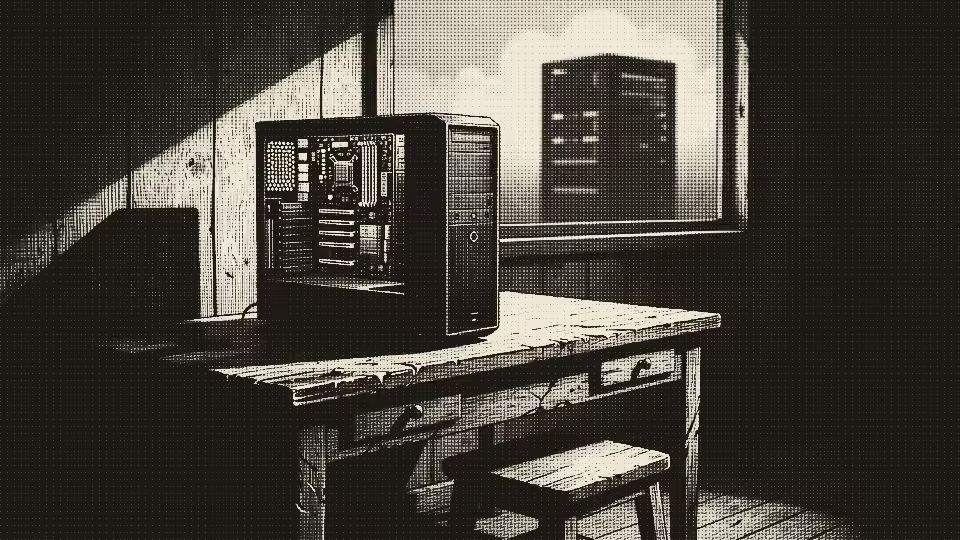
Pull up a stool. OpenAI’s Sam Altman told the Cheeky Pint podcast that it is “quite terrible” for everyone to have a chunk of the world’s limited DRAM sitting in their own computer, used maybe five percent of the time, and that the cloud is where it should live.12 I am going to argue that he has the math half right and the conclusion wrong.
Here is the thesis in one sentence: a PC with memory it barely uses is not waste, it is what ownership looks like, and no allocation chart should talk you out of it.
Start with what Altman gets right. Memory is genuinely scarce. Prices on consoles, phones and graphics cards have climbed hundreds of dollars in a year, and the shortage traces back to AI companies building data centers.1 Used PS5 Pros have reportedly hit $1,399 after the console’s official price increase in March, and the RTX 5080 just vanished from Nvidia’s marketplace weeks after the RTX 5090 was all but discontinued.3 Samsung’s latest earnings call, per IGN, suggests the squeeze will not ease next year.3 Those are facts, and they hurt.
Now the best case against me. Altman’s argument, stated fairly, is about efficiency: a data-center chip running flat out serves thousands of people, while a gaming rig serves one person a few hours a day. If supply is truly constrained, pooling beats hoarding. He also notes that many people assume open-source models running locally solve the problem, and he thinks that intuition is backwards.1 That is a coherent view, and from where he sits, it is even a rational one, since OpenAI wants as many hyperscaler data centers online as possible.3
Here is why I still reject it. Efficiency is a fine goal for a power grid. It is a strange one for a personal computer. The reason you buy RAM is not to hit a utilization target. It is so your game, your editing session or your forty browser tabs run when you want, offline, on hardware you control. A pooled system rents you the same experience on someone else’s schedule and someone else’s terms. Kotaku’s worry is that this ends with everything rented, down to a nightly drive around Vice City priced by auction.1 I will not go that far, but the direction is clear enough to resist.
Also, notice who benefits when consumer shortages push memory toward data centers. IGN’s read is that Altman likely sees those shortages as a way to funnel more chips to AI firms.3 That does not make him wrong, but it does mean he is not a neutral referee.
What would change my mind? Show me cloud gaming and cloud AI that are cheap, work without a perfect connection, and let me keep my data and my save files. Show me memory prices falling because data centers took the load, not rising. Until then, I will keep my idle gigabytes.
Our read: The shortage is real, but “your PC is the problem” blames the buyer for a supply fight the buyer did not start. Ownership is a feature, not a rounding error.
Idle RAM is not wasted RAM. It is a machine that still belongs to you.
Footnotes
-
Kotaku, “Sam Altman Thinks It’s Good If You Can’t Afford RAM For Your PC”. Retrieved October 31, 2026. ↩ ↩2 ↩3 ↩4
-
Tom’s Hardware, “OpenAI CEO says it’s ‘quite terrible’ for your PC to have RAM — Sam Altman says data centers offer better utilization”. Retrieved October 31, 2026. ↩
-
IGN, “Sam Altman Thinks It’s ‘Terrible’ for You to Have RAM in Your PC”. Retrieved October 31, 2026. ↩ ↩2 ↩3 ↩4
Like the paper? Buy us a coffee. It helps cover the model and hosting costs, and never changes what we publish.