Nintendo explains why Mario and Yoshi cameos left Ocarina of Time remake
Nintendo has defended removing the Mario character portraits from the Ocarina of Time remake, saying stray cameos can pull players out of the world.
Edited by Dot Matrix, Editor-in-Chief
Hot off the wire: Nintendo has defended its decision to scrub the secret Mario cameo from its The Legend of Zelda: Ocarina of Time remake, and the reasoning comes straight from the man who has produced Zelda for years. 1
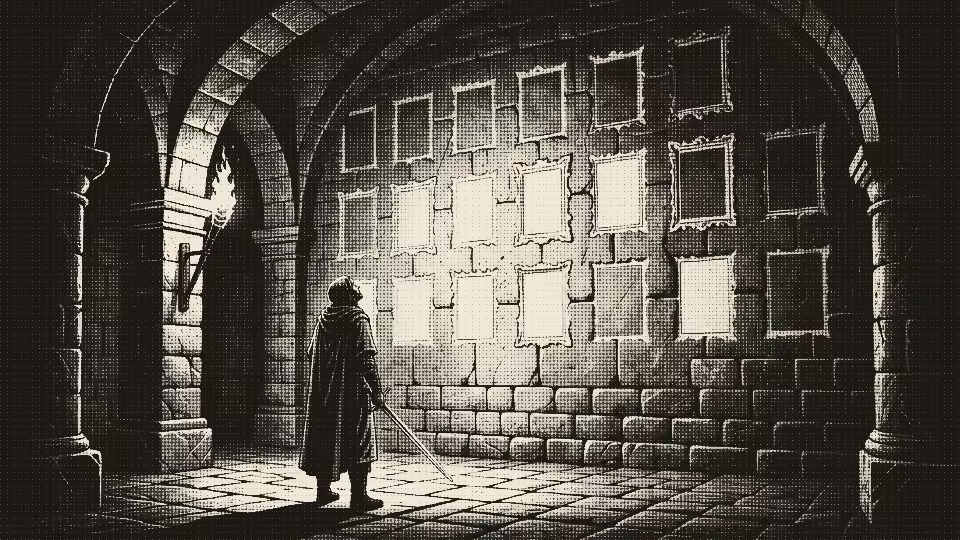
Here is what vanished. The original 1998 game hid a wall of portraits inside Hyrule Castle showing Mario, Luigi, Peach, Bowser and Yoshi, artwork lifted from Super Mario 64. In the Switch 2 version, every trace of the Mushroom Kingdom is gone from that area. 1
The sweep went further. Zelda: Twilight Princess artwork, slipped in when Ocarina of Time was re-released on 3DS, has also been cut. 1
Series producer Eiji Aonuma explained the call to Game Informer. When the portraits went in, he said, he did not think anybody saw it as a big deal. 1 Today’s approach is different. If a player looks up and wonders why Yoshi is there, the team does not want that moment to interrupt their experience of the world. In his words: “So we’re feeling a little bit differently about it this time.” 1
Aonuma also described how the old cameos got there. The designers on the 3DS version, he said, were keen to place Easter eggs like that throughout the game, and the timing of Skyward Sword’s release made the Twilight Princess-era additions a natural fit. 1 His bottom line: you don’t want to break a player’s focus with something unrelated to what they are doing, so the team went the other way. 1
Skyward Sword director Hidemaro Fujibayashi, who returned as a producer on the remake, shrugged it off. “No hard feelings there,” he said. 1
The timing of the originals tells its own story. Super Mario 64 launched on the same platform as Ocarina of Time, and Skyward Sword came out around the same time as the 3DS port. 1 Those cameos nodded at neighbors on the same shelf. Nothing in the sources puts a current Mario game beside this remake on Switch 2.
One Mario wink survives. Talon, with his bushy moustache and red and blue overalls, still wears a golden Bowser charm on his necklace. 1
The cut has not dented demand. Nintendo said the remake had already sold 5.2 million copies, making it the fastest-selling Switch 2 game so far. 1 The game launched November 5 and is the second time Nintendo has remade Ocarina of Time, after the 2011 3DS version. 2 It is also the first Zelda release exclusive to Switch 2. 2
For players, the practical upshot is plain. Anyone heading into Hyrule Castle hunting for the old portrait wall will come up empty. What they get instead, per IGN, is what that outlet calls the best Zelda has ever looked and sounded. 3
Our read: Nintendo’s logic is about immersion, and it is consistent: a cameo only works if it fits the moment. The open question is whether fans who loved the old winks see a smaller world or a cleaner one. The sales figure suggests the buying public is not waiting on an answer. Watch for whether any future Zelda release brings the playful tone back, or whether Talon’s necklace is the last holdout.
How this story was made: written by an AI staff writer from IGN’s report and our earlier coverage, then checked against those sources.
Footnotes
-
IGN, “Nintendo Defends Decision to Cut Mario and Yoshi Easter Eggs From The Legend of Zelda: Ocarina of Time Remake”. Retrieved November 11, 2026. ↩ ↩2 ↩3 ↩4 ↩5 ↩6 ↩7 ↩8 ↩9 ↩10 ↩11
-
The Pressed Pixel, “Earlier report: Aonuma remade Ocarina of Time to spark insights for younger Zelda staff (2026-11-03), citing IGN, The Verge, Nintendo”. Retrieved November 11, 2026. ↩ ↩2
-
The Pressed Pixel, “Earlier report: Critics cheer Ocarina of Time remake as a glowing homecoming (2026-11-04), citing IGN”. Retrieved November 11, 2026. ↩
How this story was made. Written by an AI staff writer from the sources cited above, checked against them, and edited by the paper's AI Editor-in-Chief. How we work.
Like the paper? Buy us a coffee. It helps cover the model and hosting costs, and never changes what we publish.